
Move well

Physical exercise is one of the natural health factors (kinesic factor*) which occupies an important place in hygionomist naturopathy. It improves the quality of life and maintains good health from a muscular, cardio and respiratory point of view. Physical activity increases and maintains flexibility (for good articulation/muscle mobility), balance (for good neuromotor adjustment), agility (to act skillfully in various situations) and more…
So-called modern life has greatly favored physical inactivity and a sedentary lifestyle, which certainly lead to a reduction in several capacities. However, it is true that we perform numbers of various tasks on a daily basis (gardening, cleaning, shopping, traveling, etc.), but is that enough to stay in shape? No, the amount of energy we expend depends on the activities we do. Depending on the degree of intensity, duration, these exercises solicit various physiological functions necessary for the proper functioning of our organism.
So will you tell me, how to move well to gain better vitality? There is no mystery, it is necessary to practice a physical activity which will bring, without any doubt, a general improvement of the state of the organism and more particularly of the muscular system.
The purpose of physical exercise is to allow your organism to function at full energy capacity. Indeed, if you train regularly to make a very precise and good gesture, it can be reproduced with greater ease without additional effort. The heart of people in good physical condition makes less effort to do the same work than that of a person in poor condition. It is therefore necessary to move more to maintain good health.
Physical activity provides many immediate and long-term benefits for staying in shape and regaining good motivation. The benefits for the organism are numerous: Increased muscle tone and muscle development, the oxygen transport system is favored (heart, lungs, blood vessels, blood) as well as cardiovascular health, solidification and remineralization of bones, relaxation of the joints and development of the tendons..., better respiratory capacity, the emunctories (organs for the elimination of waste from the organism: liver, kidneys, intestines, lungs, skin) are stimulated, improvement of digestive function, nervous functions, quality of sleep and relaxation, valuable aid in weight loss, preserves all coordination reflexes...
Regular physical activity plays an important role for people with type 2 diabetes. Indeed, by exercising more, the organism reacts better to mobilize its energy reserves, the cells then become less resistant to insulin and the sugar levels tend to decrease.
Anxious, nervous or tense people can practice exercises to relax by gently soliciting the muscles (to avoid all forms of fatigue). The session must be short (10 minutes is perfect) and take place in a pleasant, relaxing and calm place. People who have difficulty sleeping can practice these same exercises before bed, followed by a warm bath.
Please note, I am not saying that you have to become an athlete to be in shape, but a minimum of effort is required to be able to take advantage of all the qualities that physical activity gives us. For this, it must be regular (at least 3 times a week) to help maintain a young body (flexibility, agility , balance, etc.) in good health.
Depending on your physical condition, different types of exercises can be practiced: For example, to develop a good oxygen transport system or good cardiovascular health, organic endurance exercises are recommended.
Why? Organic endurance exercises include 4 rules that cannot be escaped:
- The concept of duration: The exercises must continue for as long as possible. Of course, 20 minutes is better than 10 minutes. A sustained effort over a fairly long period is one of the necessary conditions for the development of this quality.
- The type of effort: These exercises involve many muscles or large muscle masses that mobilize the oxygen transport system. It is therefore a generalized muscular work.The type of intensity: The intensity of the effort must be average (this is evaluated according to the heart rate).
- The type of intensity: The intensity of the effort must be average (this is evaluated according to the heart rate).
- The conditions: Organic endurance exercises are practiced in predominantly aerobic conditions, i.e. during exercise the oxygen transport system is able to provide the muscles in action with all the desired oxygen.
To sum up, organic endurance exercises must last as long as possible, put many muscles or large muscle masses into action, the effort must cause a moderate degree of shortness of breath (pulse between 125 and 155 beats per minute) and be carried out under aerobic conditions (no oxygen debt).
By applying these 4 rules, the oxygen transport system is solicited and the organs that constitute it, improve. Later, with good training, the cardio-circular-respiratory capacity will improve and the organism will be able to function more easily.
A regular practice at your own pace at least 3 times a week is enough to start, you can increase the pace as you progress. Sedentary beginners will have to start gradually taking into account their abilities and skills. All these exercises must, of course, remain pleasant and non-binding.
Here are some simple activities that anyone can do on a daily basis:
Walking: Why not discover the pleasures of walking in a park and take the time to stop for a few moments to perform deep breathing exercises, train to develop and maintain flexibility, do yoga, tai chi, meditation (helps the nervous system to regenerate) or others before resuming your walk.
Walk more often for short trips and leave the car at home.
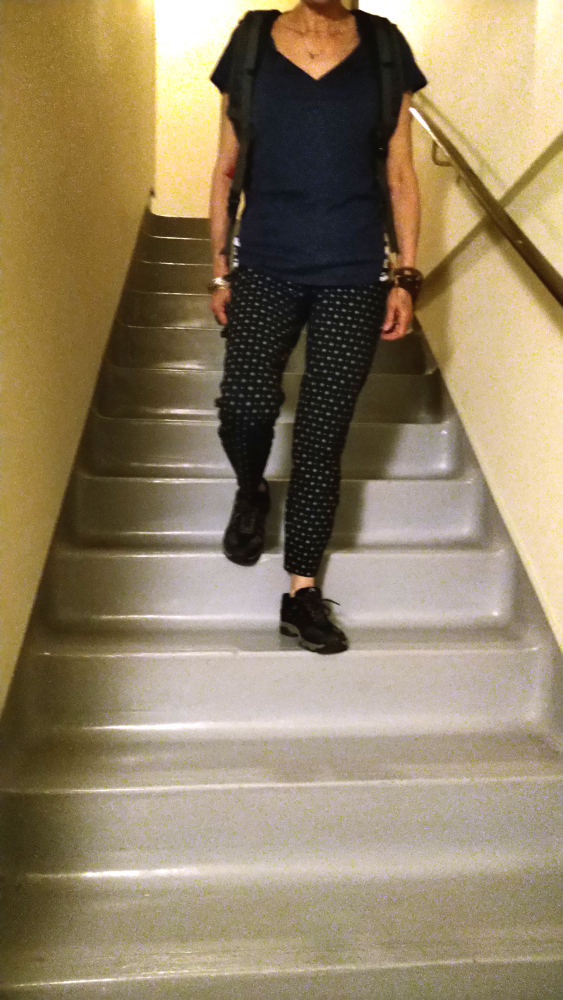
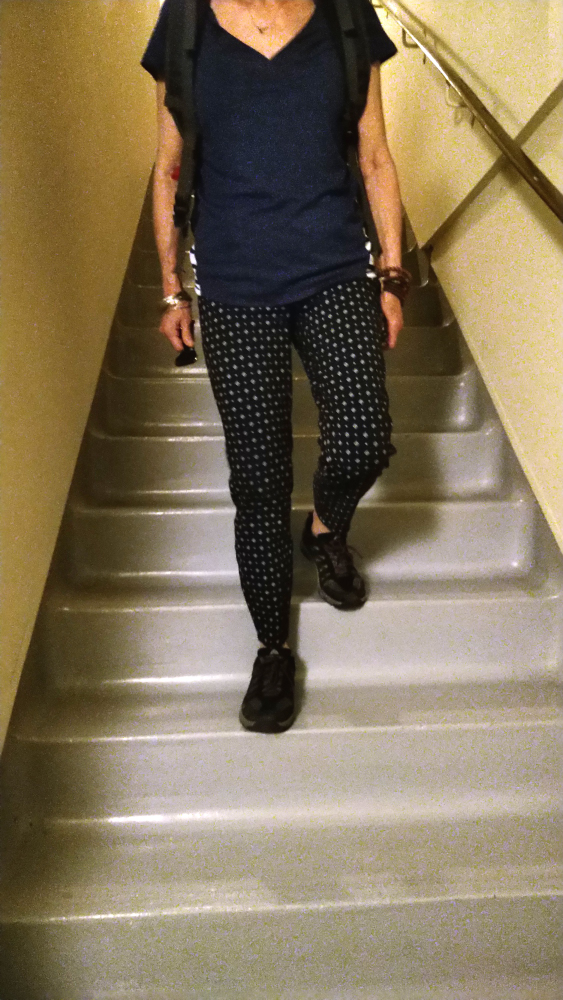
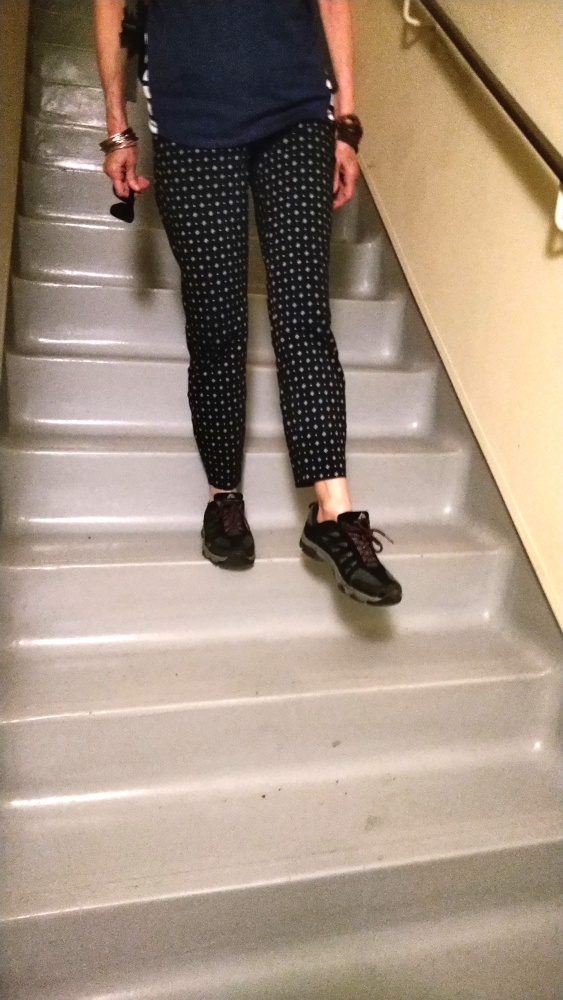
Up-down: You live in a building and if your physical condition allows it, take the stairs. This action strengthens and solicits the large muscles of the legs a lot and depending on whether you go up or down the benefits will not be the same. During the climb, the entire cardio-respiratory system is called upon in addition to the large leg muscles (quadriceps, hamstrings, etc.).
From a physiological point of view, it is more interesting to lower them very gently, like in slow motion, emphasizing each movement you make.
The motor muscles used: the quadriceps, the hamstrings, the triceps sural (muscle on the back of the leg, made up of the gastrocnemius and soleus muscles and which ends in the Achille’s tendon, etc.). These muscles and the back of the thighs have a useful braking action during the descent and a stretching of the entire posterior musculature takes place. This exercise improves the sense of balance.
Try it, this action gives very good results.
Softer exercises:
On the same principle, to strengthen the muscles of the legs and also develop the sense of balance, you can take a chair: Sit down and stand up slowly in slow motion, that is to say that this movement will be carried out in 2 steps:

Enter the posture
- Stand in front of the chair
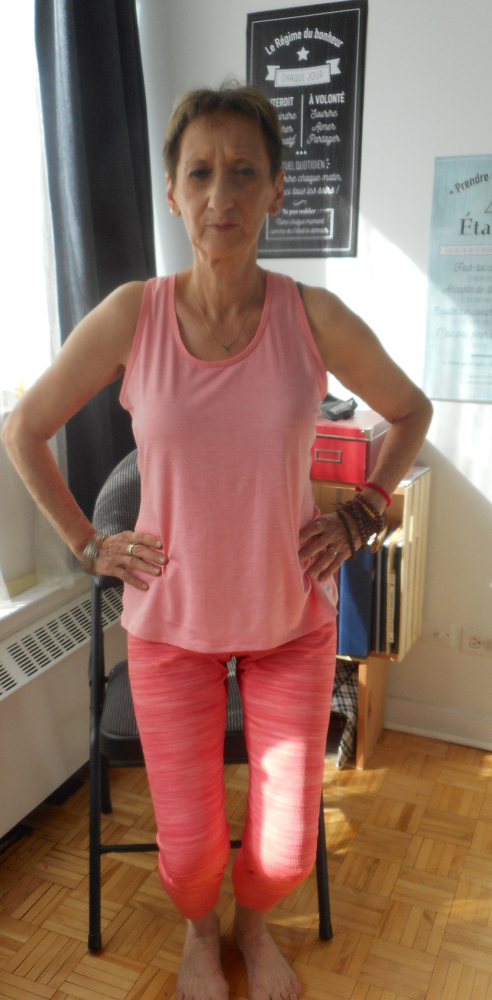
- Bend down gently (not completely),
- Maintain the posture for at least 3 breaths and more thereafter
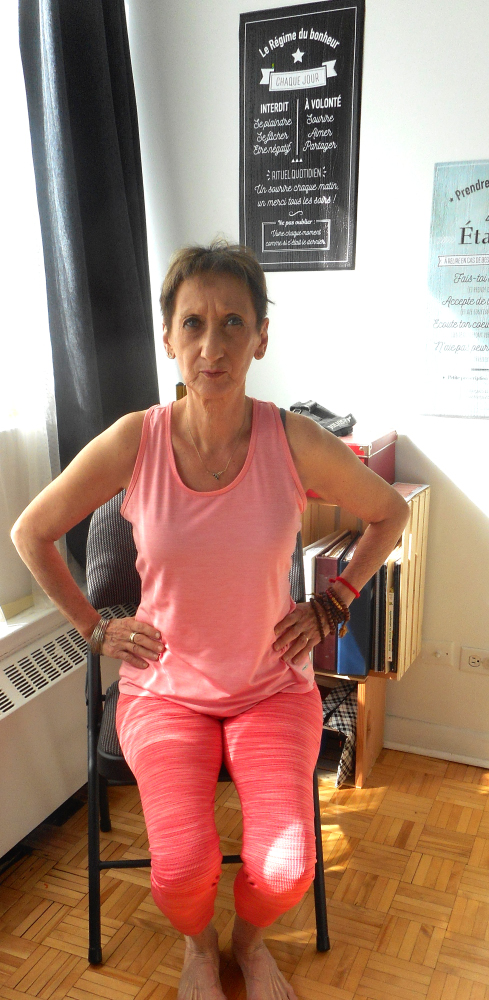
- S’asseoir pour finir le mouvement
Same process for getting up gently from a chair or an armchair:
- Get up a bit
- Maintain this position for at least 3 breaths and more thereafter
- Finish the movement by standing up
Repeat 5 times at first and increase the pace as you progress (20 reps every day is a good average).
This action can also be done automatically each time you sit down, regardless of where you are.
Always very gently like in slow motion, to exercise the arm muscles
- Take 2 small weights of 2 pounds or 900 gr each to start, lift in 2 stages
Raise your arms

Start position
- Hold the weights arms outstretched

- Lift by raising your arms
- Maintain this position for at least 3 breaths

- Finish the movement by bending the arms
Put your arms down
Start position
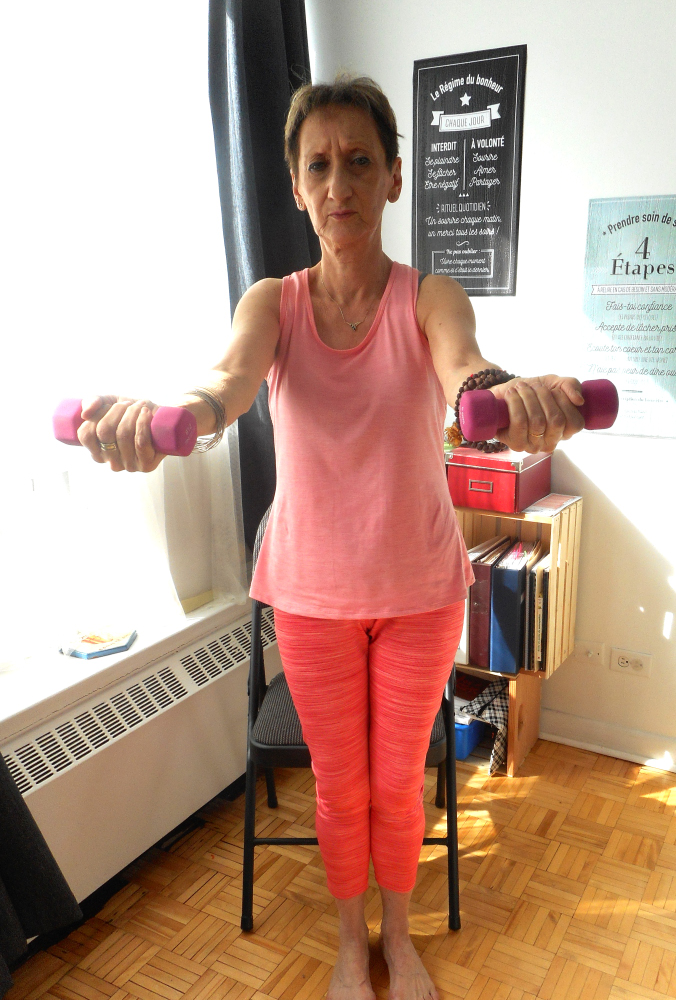
- Go down and straighten your arms, keeping the posture for at least 3 breaths
- Return to the initial position
Remember, to have a good enough level of activity, it is essential to move at least 30 minutes a day or more depending on your physical condition to gain endurance and this throughout the year.
I have suggested some simple activities to do, but it is up to you to find the activity that suits for you: Cycling, running, dancing, swimming, walking, jumping rope, etc.
It is also important to adapt your outdoor activities, especially weekends, depending on the seasons. In winter, enjoy the pleasures of snow by cross-country skiing, snowshoeing, hiking, etc. For example, in Quebec, the winters are harsh, but I still practice snowshoeing and hiking to breathe fresh air while enjoying the beautiful landscapes.
In summer, depending on whether you prefer cycling, running, swimming, hiking, kayaking, windsurfing, etc. practice, move, go out, oxygenate yourself to live in harmony with nature.
All these small physical actions accompanied by a healthy, balanced and varied diet will allow you to stay in shape and maintain good health and a flexible body at all ages of life.
(*) In naturopathy according to the Hygionomist Approach the Natural Health Factors (food, air, water, physical activity, rest, sunshine, environment, entertainment, emotional control, atoxicity etc.) are important and all contribute to improving health.